Blog Invitation

Blog Invitation

Register -Become a Follower

Showing posts with label Idiom of the Day. Show all posts

Thursday, May 28, 2026

Idiom Of The Day: It's The Rule Stupid


Idiom Of The Day: It's The Rule, Stupid!

1. IDIOM: "It's the rules, stupid."
(A sharp, procedural variation of the universal template, "It's the Economy, stupid.")

2. DEFINITION
This blunt, scolding expression means that a situation, debate, or outcome is dictated entirely by established, non-negotiable guidelines or regulations.

It is deployed as a rhetorical shutdown to point out that overcomplicating an issue with grand philosophical theories, personal opinions, or legal degrees is completely pointless—because the existing rulebook is the only thing that actually matters.

3. ORIGIN
The expression is derived from the famous political catchphrase "It's the economy, stupid," coined by political strategist James Carville during Bill Clinton's successful 1992 U.S. presidential campaign.

Carville famously wrote it on a sign at campaign headquarters to keep staff aggressively focused on the core issue that voters cared about.

Over the decades, the phrase has become a global template to refocus attention on the core of a dispute.

It is deliberately condescending and harsh, specifically engineered to puncture the ego of someone who is overthinking common sense or trying to rewrite an obvious reality.

4. USING IT IN A SENTENCE

When Senator Rodante Marcoleta condescendingly told the plenary that Senator Risa Hontiveros couldn't grasp his "Zoom-from-Jail" amendment due to her lack of a "legal background," Senator Ping Lacson bypassed a lengthy constitutional lecture, looked directly at the procedural overreach, and fired a simple, devastating message on social media: "I have a simple message—it’s the rules, stupid!"

The sudden friction caused by this idiom has sent the Senate Majority into a massive state of offense, with Marcoleta and his allies acting as though they were hit by a procedural flashbang.

Marcoleta’s entire argument rested on a very fragile pedestal: I am a lawyer; I have a legal background; therefore, my sudden motion to let our missing, ICC-targeted, or Ombudsman-investigated seatmates vote via a webcam must be a work of legal genius.

He assumed that by flashing his bar credentials, the room would immediately fall in line.

He completely failed to realize three hilarious things:

-The Deans Agree with the Non-Lawyers: The opposition to his "Zoom-from-the-Undisclosed-Safehouse" rule change doesn't just come from non-lawyers. It is being heavily criticized by actual constitutional experts and university law deans who know that the law is supposed to uphold public accountability, not serve as a tech-support hotline for fugitives.

-The Rule 24 Paradox: Bypassing the actual Committee on Rules while arguing that you are the supreme defender of legal procedure is a comedic masterpiece. You cannot claim to be the smartest legal mind in the room while actively pretending that the literal rulebook of your own chamber doesn't exist just because you have the majority numbers to vote it away.

-The Injury of the Idiom: Taking personal offense at an established idiomatic expression is the ultimate self-own. By treating a classic political quote as a literal insult to his intelligence, Marcoleta didn't prove his elite legal status—he just proved that when the actual rules are heavily stacked against your narrative, the only thing left to do is play the victim and pretend you don't understand conversational English.

Saturday, December 20, 2025

Walk The Talk


Marami nang versions ng iconic saying na "Walk The Talk". Palagi itong ginagamit sa politika lalo na sa America.  Pati mga beauty pageants nakihalo at nakisawsaw na rin.

Walk the Talk means putting your words into action - showing that you mean what you say ... by actually doing it yourself. It is a modern-day version of "Practice What You Preach."

An example is a politician who displays a TOUGH and ROUGH facade. When the going gets tough ... the tough should get goin'. But if the toughie politician was the first one to raise and wave the white flag of retreat and surrender ... it is not WALK THE TALK ... the best phrase to describe him is ... he IS ALL TALK!

If you want to be regarded as the cleanest politician - ikinula at walang bahid ... binabad ng magdamagan sa sabon ... malinis pa kay Mr. Clean ... by all means do as what you say or what your image project.  

If you want people to see yourself as principled, transparent, accountable, and honorable, nobody is stopping you as long as you maintain those standards. Hindi yong pakitang tao lang ... or sabi-sabi lang. Madali kasing makahalata ang Pinoy ... katulad ng mga Youtube podcasters who made a list of classic example of the above politicians.

Katulad ng isang politiko whose "Make my day remarks" were made to bolster his macho image and to prove to all and sundry that he is "MAISOG", not even a warrant of arrest can make his knees turn to jelly. Kibitzers have their tongues wagging when a rumor circulates that an arrest warrant will soon be served on him. Mabilis pa sa alas kuatro, hindi na makita ang politiko at nagtatago na. Sisiga-siga noon ... tapos magtatago? Something seems off?

Katulad ng isang congressman noon na hindi tinantanan ang ABS CBN kahit mismo BIR, SEC, at DOLE  testified that the company has not violated any laws and is compliant with labor standards and they have paid all their tax obligations. People saw the guy na galit siya sa mga taong nagmamalabis, sa mga sinungaling, at mandarambong at sa mga tax evaders.

Nasara nga ang ABS CBN and people expects he will continue his crusade sa pagsugpo ng katiwalian pero sabi ng mga komentarista sa youtube What gives? The guy ngayon ay nagsisinungaling sa kanyang SALN at SOCE and he might have violated the Omnibus Election Code?

Tapos nasangkot pa sa mga kontrobersya at akusasyon ng paggamit o pagtatanghal ng isang testigo na may kuwestiyonableng kredibilidad at ebidensya.  And not to be forgotten are his verbal clashes with the Speaker Pro Tempore, as he obviously is lawyering for the Discayas.Ano ba yan? Ang mga politikong santo-santito ... mga huwad lang pala? 

Then may isa ring politiko at the height of the flood projects controversy, who unabashedly barked without batting an eyelash: " Mga KADIRI kayo!" Tapos after awhile ... kasama na siya sa mga pinaginmbestigahan? Shall we say" Kadiri rin pala siya?

May isa pang politikong deny ng deny at hindi daw niya kilala ang mga akusado sa flood scam.  Wala pang 24 oras, isa-isa nang naging viral ang naglilitawan nilang mga litrato ... showing the politician and the accused having a picture together. And they looked like they were more than friends? They knew each other so very well.

Now, regarding the other versions of the maxim? Here are the hallmark examples in pageantry. The only difference is that this time around, the candidates mentioned did not use the idiom right ... they butchered it to its core.

In the Miss Cosmo 2024 pageant, Ketut Permata Juliastrid did say the line: "One thing I have learned in Miss Cosmo is... here ... we don't talk ... we walk. Whatever that means. That really became a viral and iconic moment, sparking heated discussion about action over words in pageantry.

In Miss Universe 2025, Miss Mexico Fatima Bosch had misgivings with Nawat, the Executive Director of MUO, when he publicly berated her, resulting in her WALK-OUT together with other candidates in a pre-pageant event.

The hecklers made fun of the incident and put words into her mouth: "In Miss Universe we dont WALK ... we WALK_OUT!.

Hahaha! By the way, instead of " walk the talk and practice what you preach, people often use other idioms to point out when someone is all talk and no action:

  • "All bark and no bite."
  • "All foam and no beer."
  • "Smoke and mirrors."
  • "Put your money where your mouth is."

Tuesday, December 10, 2024

Idiom Of The Day

 Let's start using idioms or idiomatic expressions when we write. When idioms are used, it add color and texture to language by creating images that convey meanings beyond those of the individual words that make them up. An idiom can be very colorful and make a 'picture' in our minds. It also shows the writer's familiarity with English. When you want to make your writing sound more conversational, including idioms can give your writing a more relaxed tone.

Idioms allow us to say a lot with few words. Idioms amplify your messages in a way that draws your readers in and helps awaken their senses. It adds dynamism and character to otherwise stale writing. They make your writing less monotonous and your readers will think that you are smart and knowledgeable. All the while ... you only clothe your writing with elaborate idioms to create an impact... saying too much with less. 

To perfect your English, you really need to become confident in using idioms and knowing the difference between breaking a leg and pulling someone's leg. So the idiom of the day is:


IDIOM: Breadwinner

MEANING: A colloquial term used to describe a person as the household's primary and sole income earner.  Breadwinners, by contributing the largest portion of household income, generally cover most household expenses ... and financially support their dependents.

ORIGIN: This phrase dates back to the 16th century and it was showed in the writing of James Melville of Scotland. Bread means food ... so in simple language, a person bringing money and financial assistance to the family was bringing home BREAD. Despite roadblocks and obstacles she or he was still successfully bringing home the dough making him the winner. Thus the idiom breadwinner.

While watching a segment on Showtime my son got confused when the host asked the contestants. "Are you a breadwinner?

He thought all the while anybody who has work and is earning money is a breadwinner. While some earn money the greatest bulk of their income is to support their family ... others earn their own money that supports nobody but himself.

USING IT IN A SENTENCE: Parents mostly are considered breadwinners. Their money is already allotted and budgeted for their immediate needs: food, house rental, electricity, tuition fees and other utilities.

Thursday, September 19, 2024

Idiom Of The Day

Let's start using idioms or idiomatic expressions when we write. When idioms are used, it add color and texture to language by creating images that convey meanings beyond those of the individual words that make them up. An idiom can be very colorful and make a 'picture' in our minds. It also shows the writer's familiarity with English. When you want to make your writing sound more conversational, including idioms can give your writing a more relaxed tone.

Idioms allow us to say a lot with few words. Idioms amplify your messages in a way that draws your readers in and helps awaken their senses. It adds dynamism and character to otherwise stale writing. They make your writing less monotonous and your readers will think that you are smart and knowledgeable. All the while ... you only clothe your writing with elaborate idioms to create an impact... saying too much with less. 

To perfect your English, you really need to become confident in using idioms and knowing the difference between breaking a leg and pulling someone's leg. So the idiom of the day is:


IDIOM: Head Over Heels

MEANING: Head over heels gained its figurative meaning in 1800. It means to be very much in love with another person. If you are head over heels with someone, you can't let the other person out of your mind.  One local song describe this feeling aptly: "Hindi ako makatulog ... hindi ako makakain. Ganyan liko-liko ang takbo ng utak ko ..."

ORIGIN: In Latin, the term is also known as: per caput pedesque ire. People believe the origin of the idiom had its birth when an American politician David Crockett wrote: " I found myself head over heels in love with this girl ...". 

Head over heels simply means:natatapakan ng paa ang utak ng isang tao ... at hindi ka na makapag-isip ng tama. People felt when they are in love they were turned upside down ... the experience is dizzying as he sees kaleidoscopic and multi-hued objects continually shifting and rapidly changing. Lutang na lutang siya sa kanyang pagmamahal.

USING IT IN A SENTENCE: He can't eat ... he can't sleep ... he was head over heels in love with you.

Monday, August 26, 2024

Idiom Of The Day

Let's start using idioms or idiomatic expressions when we write. When idioms are used, it add color and texture to language by creating images that convey meanings beyond those of the individual words that make them up. An idiom can be very colorful and make a 'picture' in our minds. It also shows the writer's familiarity with English. When you want to make your writing sound more conversational, including idioms can give your writing a more relaxed tone.

Idioms allow us to say a lot with few words. Idioms amplify your messages in a way that draws your readers in and helps awaken their senses. It adds dynamism and character to otherwise stale writing. They make your writing less monotonous and your readers will think that you are smart and knowledgeable. All the while ... you only clothe your writing with elaborate idioms to create an impact... saying too much with less. 

To perfect your English, you really need to become confident in using idioms and knowing the difference between breaking a leg and pulling someone's leg. So the idiom of the day is:


IDIOM: Crocodile tears

MEANING: They are tears shed ... that are phony... or fake ... somebody is expressing sorrow for others that are insincere. It is a show of sorrow ... too bad it was done in pretense.

Their tears of sadness are not genuine.

ORIGIN: Crocodile tears may have originated from an ancient belief that crocodiles weep after killing their victims. It was in the mid-16th century: and there was a belief that crocodiles wept while devouring or luring their prey.

Folklore has it that crocs cry to entice their targets or to express remorse for their violent actions.

USING IT IN A SENTENCE: He was crying crocodile tears when his father died ... the person he wanted to destroy.

Sunday, July 28, 2024

Idiom Of The Day

 Let's start using idioms or idiomatic expressions when we write. When idioms are used, it add color and texture to language by creating images that convey meanings beyond those of the individual words that make them up. An idiom can be very colorful and make a 'picture' in our minds. It also shows the writer's familiarity with English. When you want to make your writing sound more conversational, including idioms can give your writing a more relaxed tone.

Idioms allow us to say a lot with few words. Idioms amplify your messages in a way that draws your readers in and helps awaken their senses. It adds dynamism and character to otherwise stale writing. They make your writing less monotonous and your readers will think that you are smart and knowledgeable. All the while ... you only clothe your writing with elaborate idioms to create an impact... saying too much with less. 

To perfect your English, you really need to become confident in using idioms and knowing the difference between breaking a leg and pulling someone's leg. So the idiom of the day is:


IDIOM: Getting Cold Feet

MEANING: It means you feel too frightened about doing something you had planned to do.

A lack of courage or confidence ... to be fearful to undertake or complete an action. It means the guy has chickened out or lost one's nerve..

ORIGIN: Some experts trace the origin of cold feet to the German idiom kalte Füße bekommen, which means exactly the same thing (“to get cold feet”) with the same figurative meaning (“to lose courage”). 

The phrase first appeared in an 1878 English translation of the German novel Seed-time and Harvest, when a character allegedly leaves the poker table when his luck and feet are cold.

USING IT IN A SENTENCE: I wanted to try bungee-jumping ... but I developed cold feet.

Thursday, July 18, 2024

iDIOM oF tHE dAY

 Let's start using idioms or idiomatic expressions when we write. When idioms are used, it add color and texture to language by creating images that convey meanings beyond those of the individual words that make them up. An idiom can be very colorful and make a 'picture' in our minds. It also shows the writer's familiarity with English. When you want to make your writing sound more conversational, including idioms can give your writing a more relaxed tone.

Idioms allow us to say a lot with few words. Idioms amplify your messages in a way that draws your readers in and helps awaken their senses. It adds dynamism and character to otherwise stale writing. They make your writing more varied, making your readers think you are smart and knowledgeable. All the while ... you only clothe your writing with elaborate idioms to create an impact... saying too much with less. 

To perfect your English, you need to become confident in using idioms and knowing the difference between breaking a leg and pulling someone's leg. So the idiom of the day is:


IDIOM: Domino Effect

MEANING: It is a situation in which something bad happens and a series of similar events follow. Others called it a ripple effect. It is also similar to a chain reaction.

One action we take can cause another one to happen.

ORIGIN: The origin of domino effect is said to have originated when Eisenhower compared it to the spread of Communism. He said  Domino theory presents a metaphor of falling dominoes: that a rise or fall in communist influence in a country will have the same knock-on effect in neighboring countries, and so on.

USING IT IN A SENTENCE: The freeway accident created a domino effect, causing about 10 other cars to crash and injuring 14 other people.

Sunday, June 23, 2024

Idiom Of The Day

 Let's start using idioms or idiomatic expressions when we write. When idioms are used, it add color and texture to language by creating images that convey meanings beyond those of the individual words that make them up. An idiom can be very colorful and make a 'picture' in our minds. It also shows the writer's familiarity with English. When you want to make your writing sound more conversational, including idioms can give your writing a more relaxed tone.

Idioms allow us to say a lot with few words. Idioms amplify your messages in a way that draws your readers in and helps awaken their senses. It adds dynamism and character to otherwise stale writing. They make your writing less monotonous and your readers will think that you are smart and knowledgeable. All the while ... you only clothe your writing with elaborate idioms to create an impact... saying too much with less. 

To perfect your English, you really need to become confident in using idioms and knowing the difference between breaking a leg and pulling someone's leg. So the idiom of the day is:


IDIOM: Walking On Eggshell

MEANING: It means to be very careful about what you say or the language you use ... or to be wary about what you do in the presence of someone who is easily upset or offended.

It means you have to be cautious ... because you can get misinterpreted wrongly.

ORIGIN: Walking on eggshells is usually a misguided attempt at preserving the relationship.  The person is afraid of authentically expressing their vulnerable thoughts and feelings out of fear that they won't be heard or understood and that it will somehow cause conflict or arguing in the relationship.

There is no consensus on the idiom's origin ... Some think it came from Frobotch Finterlook, who in 1639 exclaimed to his cousin Fleetch Boolsman at the end of a tiring day of stomping on eggshells, "Damn! I am sick and tired of walking on eggshells."

USING IT IN A SENTENCE: Whether it is good or bad times ... in sickness and in pain ... I always thought I was walking on eggshells when I was around him.

Tuesday, May 28, 2024

Idiom Of The Day

 Let's start using idioms or idiomatic expressions when we write. When idioms are used, it add color and texture to language by creating images that convey meanings beyond those of the individual words that make them up. An idiom can be very colorful and make a 'picture' in our minds. It also shows the writer's familiarity with English. When you want to make your writing sound more conversational, including idioms can give your writing a more relaxed tone.

Idioms allow us to say a lot with few words. Idioms amplify your messages in a way that draws your readers in and helps awaken their senses. It adds dynamism and character to otherwise stale writing. They make your writing less monotonous and your readers will think that you are smart and knowledgeable. All the while ... you only clothe your writing with elaborate idioms to create an impact... saying too much with less. 

To perfect your English, you really need to become confident in using idioms and knowing the difference between breaking a leg and pulling someone's leg. So the idiom of the day is:


IDIOM: Speak Of The Devil

MEANING: It means that someone you have been talking about ... or gossiped ... unexpectedly appeared from out of the blue.

It meant that the person mentioned in the conversation happened to walk inside the room.

ORIGIN: The phrase is old and appears in various Latin and Old English texts from the 16th century.  The Italian writer Giovanni Torriano has the first recorded version in contemporary English, in Piazza Universale, 1666: "The English say, Talk of the Devil, and he's presently at your elbow."

USING IT IN A SENTENCE:  They were talking about Ariel and when he surprisingly appeared without notice everybody chorused: " Speaking of the devil..."

Friday, May 17, 2024

Idiom Of The Day

 Let's start using idioms or idiomatic expressions when we write. When idioms are used, it add color and texture to language by creating images that convey meanings beyond those of the individual words that make them up. An idiom can be very colorful and make a 'picture' in our minds. It also shows the writer's familiarity with English. When you want to make your writing sound more conversational, including idioms can give your writing a more relaxed tone.

Idioms allow us to say a lot with few words. Idioms amplify your messages in a way that draws your readers in and helps awaken their senses. It adds dynamism and character to otherwise stale writing. They make your writing less monotonous and your readers will think that you are smart and knowledgeable. All the while ... you only clothe your writing with elaborate idioms to create an impact... saying too much with less. 

To perfect your English, you really need to become confident in using idioms and knowing the difference between breaking a leg and pulling someone's leg. So the idiom of the day is:


IDIOM: Steal Someone's Thunder

MEANING: To take credit for what someone else did. It also can be applied to someone taking attention from someone else for his advantage. To do what someone else would do before they do it, (especially if this takes success or praise away from them) is stealing someone's thunder.

If Paula said, "I did everything so my son will finish college." The statement is not true. Her sister Melanie working in the Middle East shouldered her son's tuition fees.  Paula was only giving his son's weekly allowance. Paula was stealing the thunder from Melanie's.

ORIGIN: If you have been reading the life of John Dennis who created an innovative thunder machine in his 1709 play Appius and Virginia ... this is where it originated.

When the play Macbeth on the other hand was shown ... the Shakespeare team used John Dennis's thunder techniques without his knowledge. Not even his consent or authorization. 
 
According to some writers ... John Dennis accidentally watched the showing of Macbeth ... so when the thunder scenes were enacted ... he was short of being a rumble of thunder:" That is my thunder by G_d. The villains will play my thunder, but not my plays.

USING IT IN A SENTENCE: Arnold is stealing John's thunder when he announces to his friends he is opening a restaurant before John can say a word. Owning a restaurant is John's dream baby and he has planned it for years. He has everything wrapped up ... all he needs is the big announcement but Arnold pre-empted it.

Sunday, May 12, 2024

Idiom of the Day

 Let's start using idioms or idiomatic expressions when we write. When idioms are used, it add color and texture to language by creating images that convey meanings beyond those of the individual words that make them up. An idiom can be very colorful and make a 'picture' in our minds. It also shows the writer's familiarity with English. When you want to make your writing sound more conversational, including idioms can give your writing a more relaxed tone.

Idioms allow us to say a lot with few words. Idioms amplify your messages in a way that draws your readers in and helps awaken their senses. It adds dynamism and character to otherwise stale writing. They make your writing less monotonous and your readers will think that you are smart and knowledgeable. All the while ... you only clothe your writing with elaborate idioms to create an impact... saying too much with less. 

To perfect your English, you really need to become confident in using idioms and knowing the difference between breaking a leg and pulling someone's leg. So the idiom of the day is:


Idiom: Elephant In The Room

Meaning: Was there a real elephant in the room? NO ... are you crazy? The elephant in the room is a major problem or controversial issue that is obviously present but is being ignored or avoided as a subject for discussion. Refusing to talk about it is more acceptable and comfortable compared to talking about it at length.

If you say there is an elephant in the room, you mean there is an obvious issue or difficult situation that people don't want to explore and argue about.

No one is thrilled to talk about a subject that makes others uncomfortable. It can be scary to call out a sensitive topic. You talk and debate about it ... and somebody hearing you may misconstrue you as gossiping.  And the fear of offending somebody can make us quiet and zip our mouths shut. Whether the elephant is a topic known to all ... or only a few people are aware ... it is tricky to mention it because it might backfire on our faces. 

Origin: The phrase origin happened in 1814 when Russian  Ivan Andreevich Krylov (1769–1844), poet and fabulist, wrote a fable entitled "The Inquisitive Man".  It is about a man who visits a museum and notices every TINY little thing ... but falls flat to notice a HUMONGOUS elephant. 

Using It In A Sentence: We attended a wedding ... and everybody tries to avoid the elephant in the room (and that is ... the groom got married to his wife's older sister.)

Wednesday, April 24, 2024

Idiomatic Expression Of The Day

 Let's start using idioms or idiomatic expressions when we write. When idioms are used, it add color and texture to language by creating images that convey meanings beyond those of the individual words that make them up. An idiom can be very colorful and make a 'picture' in our minds. It also shows the writer's familiarity with English. When you want to make your writing sound more conversational, including idioms can give your writing a more relaxed tone.

Idioms allow us to say a lot with few words. Idioms amplify your messages in a way that draws your readers in and helps awaken their senses. It adds dynamism and character to otherwise stale writing. They make your writing less monotonous and your readers will think that you are smart and knowledgeable. All the while ... you only clothe your writing with elaborate idioms to create an impact... saying too much with less. 

To perfect your English, you really need to become confident in using idioms and knowing the difference between breaking a leg and pulling someone's leg. So the idiom of the day is:

IDIOM: Sins of Omission and Commission

MEANING: The idiom "Sins of Omission " means not doing what is right or failing to do as instructed. As a Catholic, if you refuse to love your neighbor ... or you failed as instructed to feed the hungry ... or give water to the thirsty ... or clothe the naked ... whatever you are deficient and seemed lacking in your love of your neighbor falls under this category.

On the other hand ... Sins of Commission are those sinful actions you proactively do. Lying to your teeth ... or stealing your parent's money falls under this genre because you commit these sins regularly and habitually.

To contrast the two ... in a sin of omission ... you choose to OMIT or not do what is right ... while in a sin of commission, you opt to COMMIT or do what is not right. While sins of commission are often ACTIVE, BLATANT, and DELIBERATE —transgressing a known law or command ... sins of omission can be PASSIVE and COMPLAISANT. A sin of commission is a WILLFUL act ... while sins of omission are just your relaxed WILL and your stubbornness to carry out what is instructed and was told of you.

ORIGIN: The theology behind a sin of omission derives from James 4:17, which teaches "Anyone, then, who knows the right thing to do and fails to do it, commits a sin." Its opposite is the sin of commission, i.e. a sin resulting from an action performed

USING IT IN A SENTENCE:  If I know that Johnathan will lie to his teeth to protect himself and I did not stop him ... or I keep mum about what I know ... it is a prototype example of sin of omission. If I helped him lie and even volunteered to be his witness ... it would be a paradigm and a classic example of sin of commission.

Monday, March 18, 2024

Idiom of the Day

 Let's start using idioms or idiomatic expressions when we write. When idioms are used, it add color and texture to language by creating images that convey meanings beyond those of the individual words that make them up. An idiom can be very colorful and make a 'picture' in our minds. It also shows the writer's familiarity with English. When you want to make your writing sound more conversational, including idioms can give your writing a more relaxed tone.

Idioms allow us to say a lot with few words. Idioms amplify your messages in a way that draws your readers in and helps awaken their senses. It adds dynamism and character to otherwise stale writing. They make your writing less monotonous and your readers will think that you are smart and knowledgeable. All the while ... you only clothe your writing with elaborate idioms to create an impact... saying too much with less. 

To perfect your English, you really need to become confident in using idioms and knowing the difference between breaking a leg and pulling someone's leg. So the idiom of the day is:


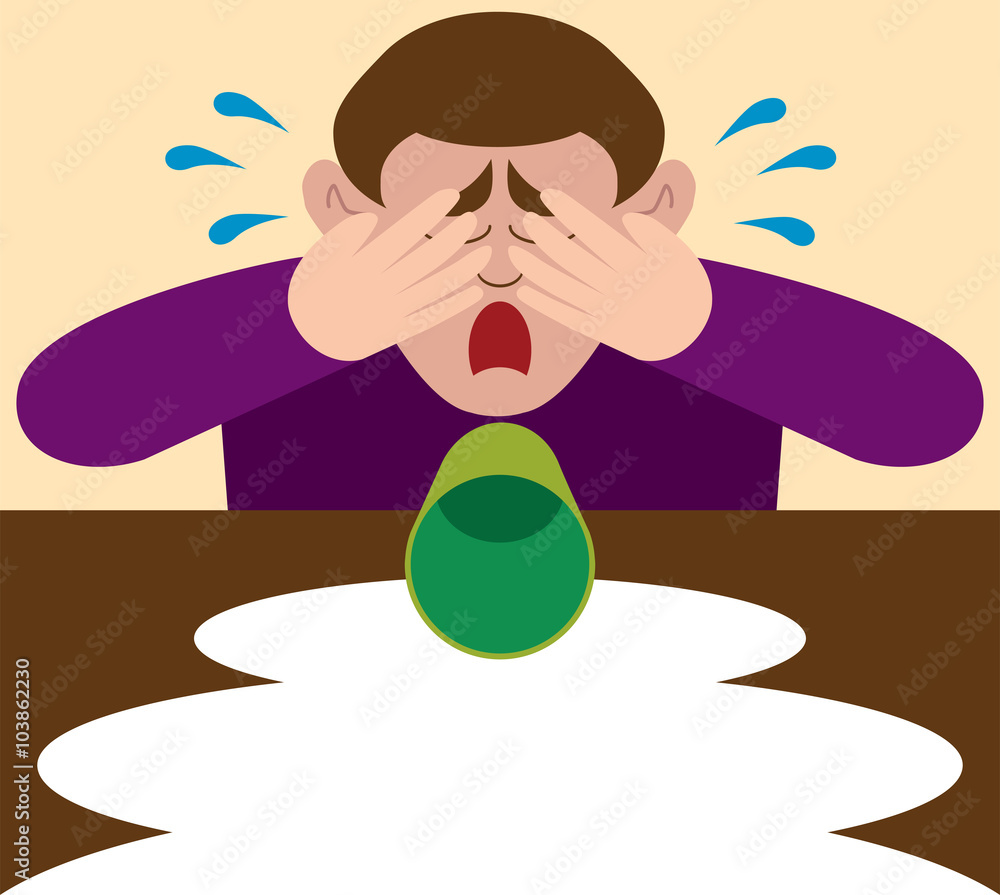
IDIOM: Crying Over Spilled Milk

MEANING: The idioms "Don't cry over spilled milk" means it is not wise to dwell on past events because you can't change them. What's done is done. To lament on something that has already happened ... and spend sorrow and your precious time thinking what you have done better is an exercise in fulility.

ORIGIN: Don't regret what cannot be undone or rectified. The metaphor for the inability to recover milk once it has been spilled has been used as a proverb in James Howell's Paroimiografia (1659). The phrase used to be “No weeping for shed milk.” Then it has metamorphosed a bit over the years to “No use fretting over shed milk,”  At present, it is now “There's no use crying over spilled milk.”

USING IT IN A SENTENCE:  Yes you made a booboo ... but please move on. There is no point in crying over spilled milk.

Tuesday, March 5, 2024

Idiom Of The Day

 Let's start using idioms or idiomatic expressions when we write. When idioms are used, it add color and texture to language by creating images that convey meanings beyond those of the individual words that make them up. An idiom can be very colorful and make a 'picture' in our minds. It also shows the writer's familiarity with English. When you want to make your writing sound more conversational, including idioms can give your writing a more relaxed tone.

Idioms allow us to say a lot with few words. Idioms amplify your messages in a way that draws your readers in and helps awaken their senses. It adds dynamism and character to otherwise stale writing. They make your writing less monotonous and your readers will think that you are smart and knowledgeable. All the while ... you only clothe your writing with elaborate idioms to create an impact... saying too much with less. 

To perfect your English, you really need to become confident in using idioms and knowing the difference between breaking a leg and pulling someone's leg. So the idiom of the day is:


IDIOM: Take it with a grain of salt (American). Take it with a pinch of salt (British).

MEANING: It means not believing something that you were told because it is unlikely to be true. The information you just received is not accurate ... so accept it with some degree of suspicion and disbelief ... treat it skeptically with reservations.

ORIGIN:The idea comes from the fact that food is more easily eaten or swallowed if taken with a small amount of salt. The origin dates back in 77 A.D. when a Roman philosopher Gaius Plinius Secundus also known as Pliny the Elder discovered the recipe for an antidote to poison. In his translation in Naturalis Historia, he used the words "be taken fasting, plus a grain of salt".

USING IT IN A SENTENCE: The story sounds so incredible ... so take it with a grain of salt until you get more details.

Sunday, January 28, 2024

Idiom Of The Day

 Let's start using idioms or idiomatic expressions when we write. When idioms are used, it add color and texture to language by creating images that convey meanings beyond those of the individual words that make them up. An idiom can be very colorful and make a 'picture' in our minds. It also shows the writer's familiarity with English. When you want to make your writing sound more conversational, including idioms can give your writing a more relaxed tone.

Idioms allow us to say a lot with few words. Idioms amplify your messages in a way that draws your readers in and helps awaken their senses. It adds dynamism and character to otherwise stale writing. They make your writing less monotonous and your readers will think that you are smart and knowledgeable. All the while ... you only clothe your writing with elaborate idioms to create an impact... saying too much with less. 

To perfect your English, you really need to become confident in using idioms and knowing the difference between breaking a leg and pulling someone's leg. So the idiom of the day is:


IDIOM: Spill the beans

MEANING: It means to disclose and divulge a secret prematurely either accidentally or imprudently ... ruining the surprise. It is like giving away details that are personal in nature usually by a slip.

ORIGIN: Its origin dates back to the ancient Greek process of voting where votes were cast by placing two different colored beans in the vase... one color means a YES vote and the other color a NO vote.  The votes are counted and tallied and if someone had "spilled the beans" ... the election results were revealed or outed.

USING IT IN A SENTENCE: Elaine was livid.  Her younger sister accidentally spilled the beans when she told everybody about the surprise birthday party.

Sunday, December 17, 2023

Idiom Of The Day


Let's start using idioms or idiomatic expressions when we write. When idioms are used, it add color and texture to language by creating images that convey meanings beyond those of the individual words that make them up. An idiom can be very colorful and make a 'picture' in our minds. It also shows the writer's familiarity with English. When you want to make your writing sound more conversational, including idioms can give your writing a more relaxed tone.

Idioms allow us to say a lot with few words. Idioms amplify your messages in a way that draws your readers in and helps awaken their senses. It adds dynamism and character to otherwise stale writing. They make your writing less monotonous and your readers will think that you are smart and knowledgeable. All the while ... you only clothe your writing with elaborate idioms to create an impact... saying too much with less. 

To perfect your English, you really need to become confident in using idioms and knowing the difference between breaking a leg and pulling someone's leg. So the idiom of the day is:

IDIOM: Under the weather.

MEANING: If you say that you are under the weather you feel slightly sick or ill.

ORIGIN: Under the weather has its origin when sailors become seasick because the boat has been rocked violently by hot-tempered weather conditions, the captain usually order this seamen to transfer to the bottom of the ship where it is stable and calm. Which means under "the weather rail". 

The phrase under the weather rail was later shortened to the idiom being used now "under the weather".

USING IT IN A SENTENCE: I don;t feel like going to the mall today ... I am feeling a bit under the weather.

Friday, November 17, 2023

Idioms Of The Day


Let's start using idioms or idiomatic expressions when we write. When idioms are used, it add color and texture to language by creating images that convey meanings beyond those of the individual words that make them up. An idiom can be very colorful and make a 'picture' in our minds. It also shows the writer's familiarity with English. When you want to make your writing sound more conversational, including idioms can give your writing a more relaxed tone.

Idioms allow us to say a lot with few words. Idioms amplify your messages in a way that draws your readers in and helps awaken their senses. It adds dynamism and character to otherwise stale writing. They make your writing less monotonous and your readers will think that you are smart and knowledgeable. All the while ... you only clothe your writing with elaborate idioms to create an impact... saying too much with less. 

To perfect your English, you really need to become confident in using idioms and knowing the difference between breaking a leg and pulling someone's leg. So the idiom of the day is:

IDIOM: R and R

MEANING: An abbreviation or an expression meaning Rest and Recreation. It is not an idiomatic expression per se ... just an acronym or an expression.

ORIGIN: R & R refers to the time that you spend relaxing when you are not working. R & R is an abbreviation for rest and relaxation.  In the military, it also means rest and recuperation. or rest and recovery which is the time period specifically designated to allow recovery after a strenuous and relentless activity. It is done for pleasure rather than work.

USING IT IN A SENTENCE: He went to Boracay to unwind and have a little R and R.

Monday, October 30, 2023

Idiom Of The Day


Let's start using idioms or idiomatic expressions when we write. When idioms are used, it add color and texture to language by creating images that convey meanings beyond those of the individual words that make them up. An idiom can be very colorful and make a 'picture' in our minds. It also shows the writer's familiarity with English. When you want to make your writing sound more conversational, including idioms can give your writing a more relaxed tone.

Idioms allow us to say a lot with few words. Idioms amplify your messages in a way that draws your readers in and helps awaken their senses. It adds dynamism and character to otherwise stale writing. They make your writing less monotonous and your readers will think that you are smart and knowledgeable. All the while ... you only clothe your writing with elaborate idioms to create an impact... saying too much with less. 

To perfect your English, you really need to become confident in using idioms and knowing the difference between breaking a leg and pulling someone's leg. So the idiom of the day is:

IDIOM: Written in the stars 

MEANING: If you believe that something is written in the stars, you believe that it will come true because there are external and celestial bodies and forces up there that are aligned to make things happen in the future ... like the stars in the constellation, the galaxies ... all heavenly bodies collide as if there is a conspiracy of everything cosmic and extra-terrestrial that conspire to make something that is unlikely to happen ... come true. The meaning is almost like it was destined, pre-determined, or fated/meant to do something.

ORIGIN:  "Written in the Stars” is a miss quote from Julius Cæsar (Shakespeare) talking about destiny ... or Fate. Written in the Stars" is also a song by English musician Elton John and American singer LeAnn Rimes. The song came from the musical Aida. If something is written in the stars ... Fates have taken control. Apart from the sun, the moon, and the planets, the stars in heaven are aligned and make things happen for somebody.

USING IT IN A SENTENCE: John and Jean are poles apart, but it was written in the stars ... despite their differences ... it was a relationship made in heaven.

Flag Counter

free counters

Be A Follower

Be A Follower

Blog Of The Week

Blog Of The Week

Blog of The Week

Blog of The Week

Revolver Map

Powered By Blogger

Search This Blog

Visitors Stats Today

  • …

    Posts
  • …

    Comments
  • …

    Pageviews

Today Is

Calendar Widget by CalendarLabs

World Time

About Me

Wretired writer, Malayang Free Thinker, Probing Blogger, Disenteng Dissenter, Tempered temperamental, Liberal-Conservative, Grammar and Syntax Police, Pageant Connoisseur, Hibiscus Collector

Back To Top

”go"

Labels

Ang Pambansang ATM: Hero ng Pamilya o Sira-Sirang Machine?

  Sa dakilang kultura ng Pamilyang Pilipino, may limang pangunahing Social Class: ang Mayaman, ang Middle Class, ang Mahirap, ang Isang Kahi...

Popular Posts